
The Best Questions to Ask in a Job Interview: A Recruiter’s Guide for Switzerland and Europe
Sep 24, 2026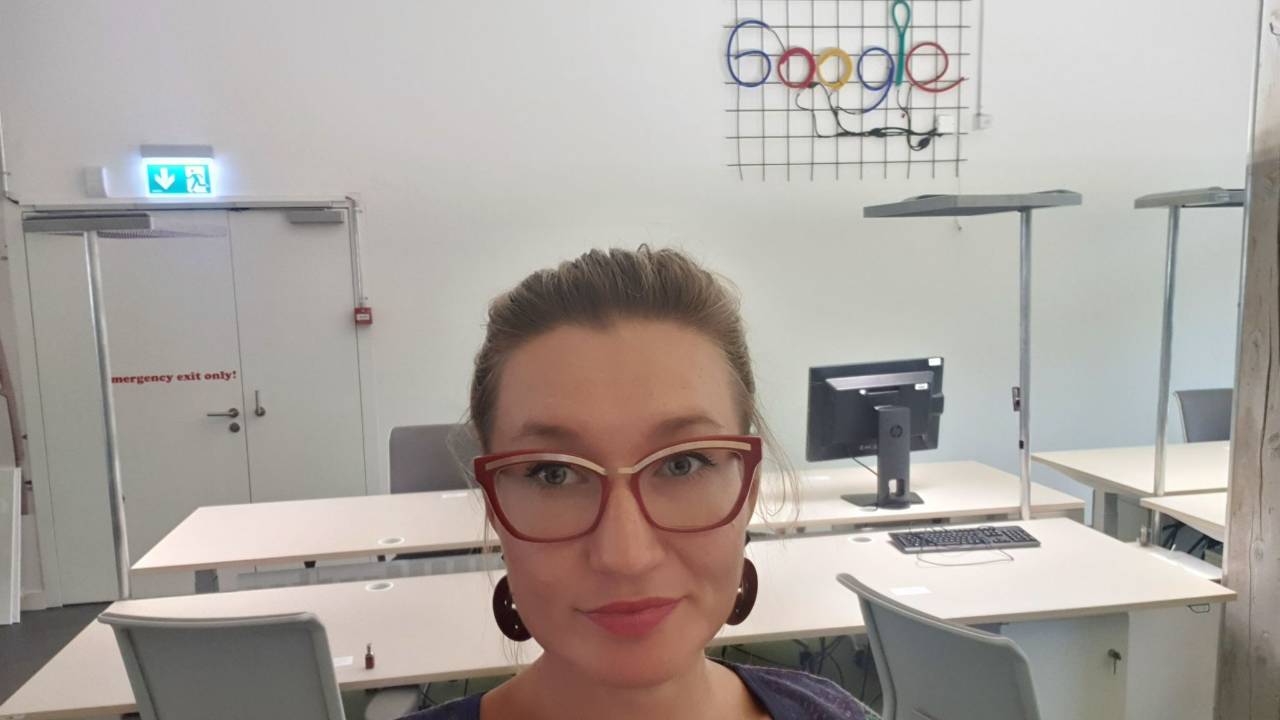
If you are interviewing for a job in Switzerland or elsewhere in Europe, the questions you ask at the end of an interview can be just as important as the answers you give.
As a former recruiter at Google and Meta, I’ve interviewed 3,000+ candidates and spoken with hiring managers about hundreds of interview processes.
One pattern came up repeatedly: strong candidates ask strong questions.
After interviews, I would often ask hiring managers:
“How did it go?”
And one of the comments I heard again and again was:
“They asked really good questions.”
Good questions do more than show that you are interested in the position.
They can demonstrate preparation, curiosity, strategic thinking and seniority, while also helping you understand whether the company, role and team are actually right for you.
This is particularly important when interviewing for roles in competitive job markets such as Switzerland and other European tech and business hubs, where candidates may be competing for positions across international teams, markets and cultures.
Why the questions you ask matter
A job interview is not simply a test where the company evaluates you.
It is also your opportunity to evaluate the company.
This is especially important when you are considering a move to a new company, country or market. For candidates interviewing in Switzerland or elsewhere in Europe, understanding the team structure, expectations, management style and business context can help you make a more informed career decision.
Compare these two questions:
“What would my responsibilities be?”
and:
“What would you expect the person in this role to have achieved after the first six months?”
Both are reasonable.
But the second question demonstrates a different level of thinking. It moves the conversation from the job description to impact, expectations and measurable results.
That is particularly valuable for experienced and senior candidates.
10 questions to ask during a job interview
You don't need to ask all of these questions. Choose the ones that are relevant to the role and let the conversation guide you.
1. What would success look like in this role?
Try:
-
What would success look like after the first 3, 6 or 12 months?
-
What are the most important priorities for the person joining the team?
-
How will success be measured?
-
What would make you say, six months from now, “We made the right hire”?
These questions help you understand what the company actually expects from the person they hire.
2. Why is the company hiring for this role now?
This is one of the most useful questions you can ask.
The answer can help you understand whether the position was created because of:
-
company growth;
-
a new business initiative;
-
expansion into a new market;
-
a replacement;
-
or a specific challenge the company needs someone to solve.
For candidates considering opportunities in Switzerland and the wider European market, this context can be particularly useful when comparing roles across international companies.
3. What are the biggest challenges facing the team?
You can ask:
-
What is the biggest challenge the team is facing right now?
-
What has been difficult to solve so far?
-
What would you like the new person to change or improve?
The answers can tell you much more than a standard job description.
They also help you understand whether the role is primarily about maintaining an existing process or building something new.
4. How is the team structured?
Ask about:
-
team structure;
-
reporting lines;
-
collaboration with other teams;
-
decision-making;
-
and the stakeholders you would work with most closely.
This is especially relevant for international and cross-border teams, which are common across European companies.
5. How would you describe your management style?
You are not only choosing a company.
You are choosing a manager.
Useful questions include:
-
How do you usually give feedback?
-
How often do you have 1:1s?
-
What do you value most in the people you manage?
-
What does a strong working relationship look like to you?
These questions can help you understand the working environment before accepting an offer.
6. What are the company's priorities for the next 12 months?
For more senior positions, you can go one step further:
-
What are the company's biggest priorities this year?
-
What are the main challenges standing in the way of those goals?
-
How does this role contribute to the wider business strategy?
This helps you understand how the position fits into the bigger picture.
7. What would you want the person in this role to bring to the team?
This is particularly useful because the answer may reveal what is missing today.
For example, the company may need someone who can:
-
build a new function;
-
bring a particular market expertise;
-
introduce more structure;
-
manage stakeholders;
-
or scale an existing process.
That information can help you position your experience more effectively during the rest of the interview.
8. What are the next steps in the hiring process?
This is a simple but important question.
You can ask:
-
What are the next stages of the interview process?
-
Who would I meet next?
-
What should I expect from the next interview?
-
What is the expected timeline?
Understanding the process can help you prepare appropriately, especially when interviewing with international companies where several stakeholders may be involved.
9. Is there anything in my background you'd like me to clarify?
This can be a powerful question towards the end of an interview:
“Is there anything in my background or experience that you'd like me to clarify or expand on?”
It gives the interviewer an opportunity to raise a concern while you still have the chance to address it.
It can also tell you how your profile is being perceived.
10. What makes someone successful on this team?
This question can open up a useful conversation about culture, expectations and working style without relying on generic questions about “company culture.”
You can follow it up with:
“What do the people who perform particularly well here tend to have in common?”
Don't ask questions just to sound impressive
There is one important rule: don't ask a question simply because it sounds senior.
The strongest questions are relevant to the conversation.
If the interviewer has already explained something, don't repeat the question just because it was on your prepared list.
Instead, build on what you've heard.
For example:
“You mentioned that the team is expanding into the Swiss market. What do you see as the biggest challenge there today?”
That is much stronger than asking a generic question about expansion.
It shows that you were listening.
How many questions should you prepare?
Before an interview, prepare around 5–10 questions.
You probably won't ask all of them.
Some will be answered naturally during the conversation. Others may become irrelevant as you learn more about the role.
That's exactly what you want.
The goal isn't to get through a checklist.
The goal is to have a meaningful conversation with the interviewer and gather enough information to decide whether the opportunity is right for you.
Interview preparation for jobs in Switzerland and Europe
Interview expectations can vary between companies, industries and countries. A process for a Swiss tech company may look different from one at a large multinational in Germany, the Netherlands or the UK.
But regardless of the market, the underlying principle remains the same:
Use the interview to understand the opportunity, not just to prove that you deserve it.
If you are preparing for a job search in Switzerland or elsewhere in Europe, think beyond the questions you are likely to receive.
Prepare the questions you need answered before making a career decision.
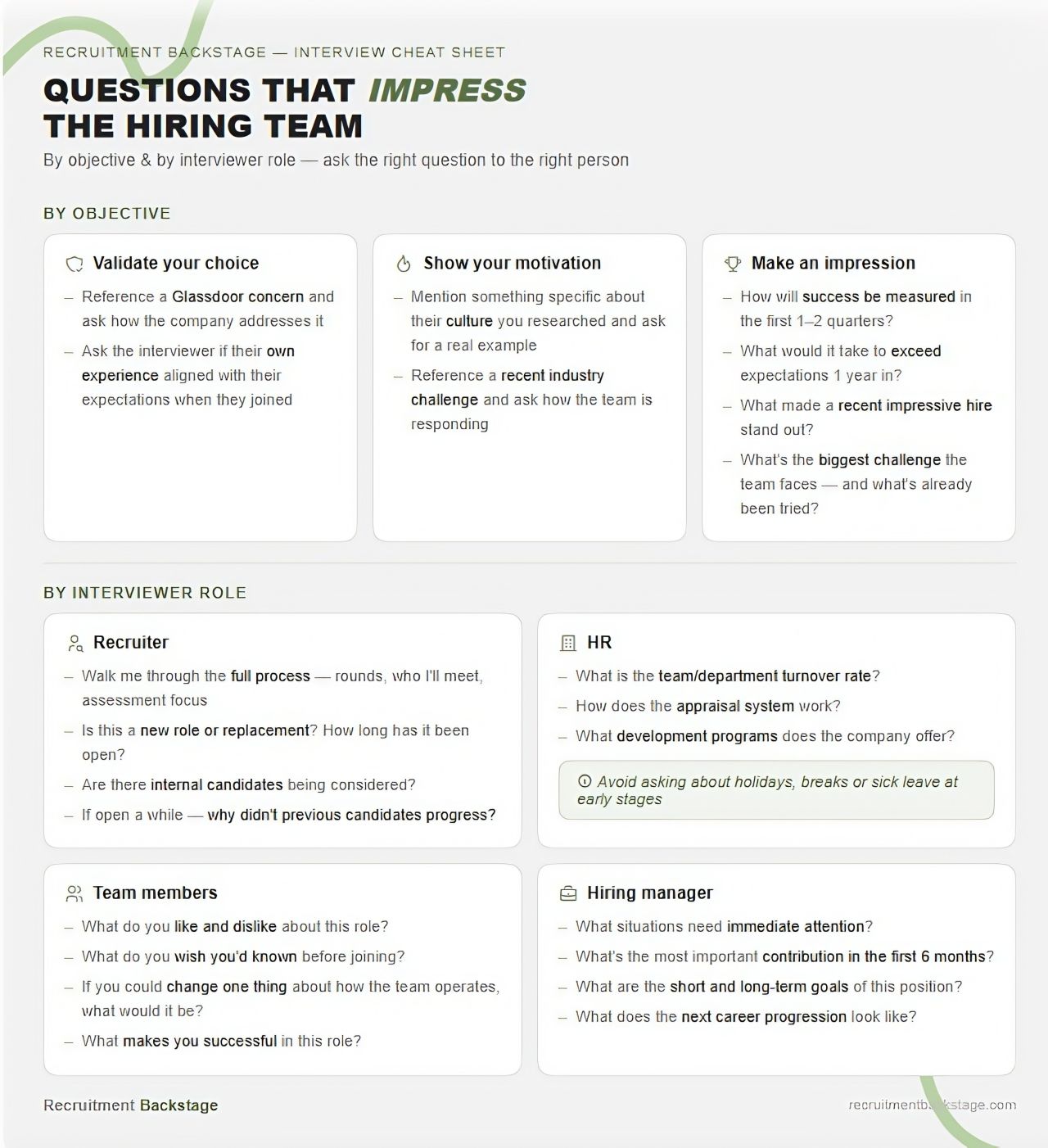
Download the interview questions checklist
We've put together a practical interview question sheet with examples you can use before your next interview.
Save it, adapt the questions to your situation, and take it with you when preparing for your next conversation with a hiring manager.
At Recruitment Backstage, we help candidates navigate the job search process with practical guidance based on real recruiting experience: from CV positioning and interview preparation to understanding how hiring works in European and international companies.
Get support when these questions actually come up
Salary questions, interviews, negotiations, and everything in between. Inside the Career Club, you don’t have to figure it all out alone.
Get structure, real recruiter feedback, and ongoing support throughout your job search.